

-
About DAEON

-
Our Team
-
Practice Areas
-
Case Results
-
Resources
-
Contact Us
 Back
Back
[DAEON Law Firm] Balaan Searches for a Buyer, Facing a Test of 'Conditional Survival'
Plunging sales and full capital impairment; rehabilitation plan hinges on 'securing a buyer'Sellers push back as settlement receivables are frozen... signs of collective actionInvestors also caught off guard by rehabilitation filing... Silicon2: "We were not informed"
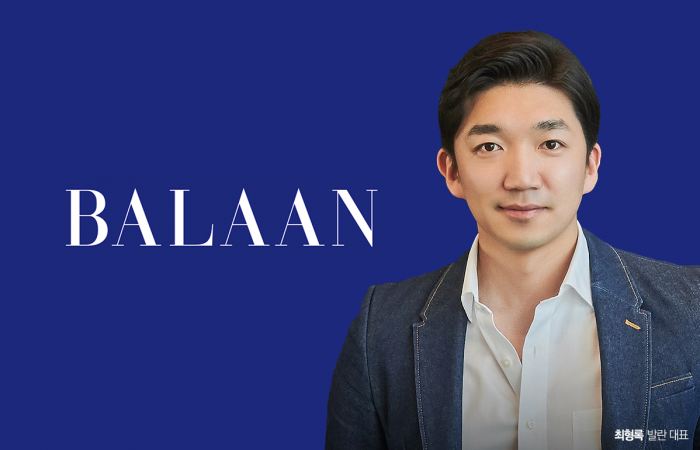 Graphic by Park Hye-su
Balaan, the online luxury goods platform, has finally entered corporate rehabilitation proceedings.
According to industry sources on the 1st, Balaan CEO Choi Hyung-rok had denied reports that the company was pursuing rehabilitation, but on the 31st of last month he finally admitted in an official statement that the company had filed for rehabilitation. The company made the filing official just four days after related documents leaked on the 26th and stirred controversy. The months-long failure to settle payments with partner companies culminated in a loss of trust and a liquidity crisis, leading to court receivership.
Alongside the rehabilitation filing, Balaan said it would seek normalization through a merger and acquisition (M&A). CEO Choi said, "We will pursue an M&A with the business continuity of our sellers as the top priority."
However, observers both inside and outside the market point out that both rehabilitation and an acquisition are unlikely to materialize.
Given the accumulated debt, the damage to the brand's image, and the backlash over unpaid settlements, the plan is expected to run into trouble from its very first premise: 'securing a buyer.'
The company's finances have already reached their limit. Balaan's revenue in 2023 was KRW 39.2 billion, a 56% plunge from the previous year (KRW 89.1 billion). Its total equity stood at negative KRW 7.7 billion, a state of full capital impairment. Even so, last month Balaan signed a KRW 15 billion convertible bond (CB) investment agreement with KOSDAQ-listed Silicon2. KRW 7.5 billion was paid in as the first tranche, with the remaining KRW 7.5 billion to be disbursed once certain conditions, such as a target share of direct-purchase sales and achieving operating profit, were met.
But once the rehabilitation filing became official, Silicon2 also could not hide its dismay, saying it had "not been informed in advance." Silicon2 holds the right to acquire a 50% stake in Balaan through a call option, but concerns have been raised that the unpaid-settlement crisis could adversely affect the entire investment structure.
Once rehabilitation proceedings commence, all debts are temporarily frozen. This includes the commercial claims (settlement payments) held by sellers on the platform, and whether and how they are repaid is subsequently determined under the rehabilitation plan. Roughly 1,300 businesses are estimated to be selling on Balaan, and industry observers say unpaid settlements could reach tens of billions of won.
Accordingly, the backlash from sellers is intensifying. In an open chat room of about 800 members, complaints poured in: "They asked us to wait, and then went into rehabilitation anyway," and "Hundreds of millions of won in settlements are tied up, and recovering them is practically impossible."
Some businesses are moving toward collective legal action, including criminal complaints and civil lawsuits against CEO Choi Hyung-rok. One seller representative said, "I think the odds of getting our settlement money back are less than 1%."
In legal circles, the prevailing view is that the rehabilitation proceedings will be difficult to wrap up in a short period. Attorney Shin Dong-woo of DAEON Law Firm noted, "Sellers, as general unsecured creditors, rank low in repayment priority, so their actual recovery rate is likely to be low as well," adding, "Once rehabilitation begins, all claims are legally frozen, but for small and mid-sized businesses that immediately recycled their settlement payments as cash, this could be a devastating blow to liquidity."
Experts stress that for Balaan's rehabilitation to succeed, it must not only secure a buyer but also fundamentally restore trust and normalize its financial structure. However, skeptics note that at this point, few companies are likely to express an intention to acquire it.
Seo Yong-gu, a professor of business administration at Sookmyung Women's University, said, "For a luxury platform, the core asset is not tangible assets but intangible assets based on customers and data, and with the brand image severely damaged, there is little incentive to acquire it." He added, "At a time when even major offline retailers are struggling to sell, hardly anyone will readily step up to acquire an intangible platform that is in rehabilitation."
https://www.newsway.co.kr/news/view?ud=2025040110233358344
314 clicks