

-
About DAEON

-
Our Team
-
Practice Areas
-
Case Results
-
Resources
-
Contact Us
 Back
Back
[DAEON Law Firm] The End of a 'Unicorn Without Profits'... Balaan CEO Choi Hyung-rok, From 'Growth Myth' to 'Rehabilitation Court'
Outward growth without profitability... capital impairment amid three straight years of lossesSettlement suspension triggers wave of criminal complaints... a platform ecosystem that lost its trustNormalization uncertain even after rehabilitation commencement... structural crisis with no buyer in sight
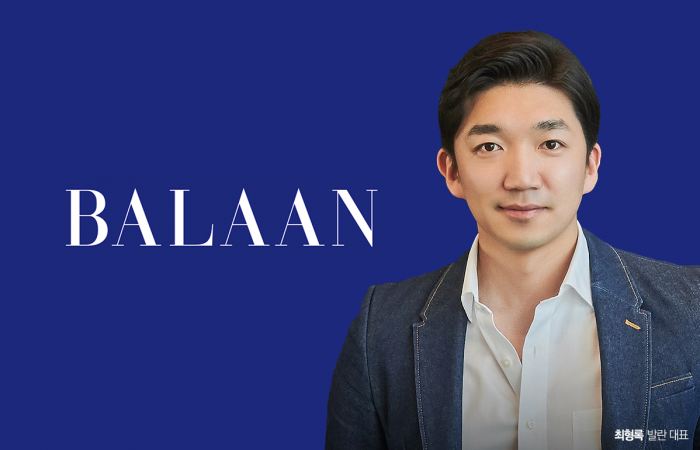 Graphic by Park Hye-su
Balaan, once valued at KRW 800 billion and regarded as a 'unicorn' of Korea's luxury platform market, has finally entered court receivership. Its founder, CEO Choi Hyung-rok, is under police investigation over the recent failure to pay out sellers' sales proceeds, and a travel ban has been imposed on him.
According to industry sources on the 10th, after Balaan filed for corporate rehabilitation on the 31st of last month, the Seoul Rehabilitation Court decided on the 4th to commence proceedings and designated CEO Choi Hyung-rok as the custodian without appointing a separate outside administrator. As a result, he now shoulders the dual burden of submitting a rehabilitation plan and responding to a criminal investigation.
Choi Hyung-rok, a former Air Force accounting officer, founded Balaan in 2015 immediately after his discharge. Starting out as a C2C platform model connecting luxury goods sellers with consumers, Balaan grew rapidly during the COVID-19 period on the back of increased consumption and demand for contactless shopping.
Annual revenue expanded from KRW 24.3 billion in 2020 to KRW 89.1 billion in 2022. CEO Choi then used aggressive marketing and fundraising strategies to elevate Balaan to the ranks of the 'world's No. 3 luxury platform.'
Behind the outward growth, however, lay a structural absence of profitability. Balaan has not posted a profit in any year since 2020. In 2022 in particular, its annual net loss reached KRW 37.4 billion, followed by a further loss of KRW 12.3 billion in 2023.
At the end of 2023, it recorded total assets of KRW 7.6 billion and total liabilities of KRW 15.3 billion, leaving total equity at negative KRW 7.7 billion and the company in full capital impairment. Current assets were only about KRW 5.6 billion, while current liabilities were about KRW 13.8 billion, leaving a short-term liquidity shortfall of KRW 8.2 billion alone. In effect, it was a structure in which neither seller settlements nor operating expenses could be paid without an inflow of outside funds.
The financial situation was serious enough that the audit report explicitly stated that 'total liabilities exceed total assets, raising significant uncertainty about the company's ability to continue as a going concern.'
Nevertheless, from 2021 Balaan spent roughly KRW 69.1 billion on advertising and promotion over three years, focusing on expanding its scale. It poured 30-40% of its annual revenue into marketing, but never built a revenue base to offset it.
Its internal control structure was also inadequate. Improvements to the seller settlement system were repeatedly postponed, which led to last month's failure to pay out sales proceeds. Balaan halted settlements from March 24 and stopped even product transactions from the 28th.
Once the situation became official, some sellers filed criminal complaints against CEO Choi on charges of fraud and embezzlement. More than 20 complaints are reported to have been filed so far. The complainants claim that "after the TMON and WeMakePrice cases, Balaan promised to introduce a settlement agency, but the promise was never kept."
In particular, given that Balaan continued to solicit sign-ups for advertising products right up until settlements were halted, suspicions have been raised that this was a planned deferral of settlements rather than a simple mistake. In response, the police imposed a travel ban on CEO Choi and launched a full-scale investigation.
Damage to investor trust has also become unavoidable. On February 28, Balaan secured a total of KRW 15 billion in convertible bond (CB) investment from KOSDAQ-listed Silicon2. KRW 7.5 billion was paid in as the first tranche, with the remainder to be paid if Balaan met certain conditions.
But when the rehabilitation filing became known, Silicon2 could not hide its dismay, saying it "had not been informed of the matter in advance." The 50% stake secured through a call option is now increasingly likely to lose its practical meaning as the rehabilitation proceedings move forward.
With the court's decision to commence rehabilitation proceedings, Balaan's debts have been temporarily frozen. The settlement claims held by sellers will mostly be classified as general unsecured claims, which may rank low in repayment priority. Industry analysts believe the recovery rate is likely to end up below 10%. For this reason, some sellers are shifting their strategy to pursuing personal liability through criminal complaints in addition to civil lawsuits.
At present, Balaan's prospects for rehabilitation are unclear. No company has yet expressed an intention to acquire it. Given the combination of distress factors, including brand image damage, financial risk, and settlement debts, the likelihood of a strategic investor (SI) or financial investor (FI) stepping in is also assessed as low. The deadline for submitting the rehabilitation plan is June 27. Even if a plan is submitted, it is uncertain whether the court will approve it. In particular, with self-rehabilitation difficult, the possibility of conversion to bankruptcy proceedings cannot be ruled out if the company fails to secure a buyer.
Immediately after filing for rehabilitation, CEO Choi Hyung-rok said, "We are keeping every option open to resolve the settlement problem and normalize our service." But the prevailing view in the industry is that, given the nature of the platform business, which runs on trust, trust once lost is not easily regained. This is why analysts increasingly believe that Balaan's rehabilitation will be difficult unless it secures accounting-based transparency, normalizes its capital structure, and repairs its relationships with sellers.
Attorney Shin Dong-woo of DAEON Law Firm noted, "Once rehabilitation proceedings begin, sellers, as general unsecured creditors, will inevitably be pushed down the repayment priority, so their actual recovery rate is likely to be very low." He added, "For small and mid-sized sellers in particular, whose settlement payments fed directly into revenue and operating funds, rehabilitation could actually lead to a liquidity crisis of their own."
"In the end, the essence of a platform business is trust, and when that trust has collapsed, it is hard to expect legal rehabilitation alone to normalize the business," he continued. "Rebuilding trust when investors, sellers, and consumers have all left is effectively starting over from scratch."
https://www.newsway.co.kr/news/view?ud=2025041011095101172
611 clicks