

-
About DAEON

-
Our Team
-
Practice Areas
-
Case Results
-
Resources
-
Contact Us
 Back
Back
[DAEON Law Firm] "I Don't Remember" vs. "It Was Consensual"... Conflicting Quasi-Rape Cases, and the Standard That Separates Guilt From Innocence
Reports rising after drinking gatherings... courts weigh 'objective circumstances' as a whole over testimony
Cases in which sexual intercourse following a drinking occasion, such as a company dinner, social gathering, or blind date, leads to a quasi-rape complaint are steadily increasing. In most such cases, the accounts clash head-on: one side claims "it was a consensual relationship," while the other states "I was drunk and have no memory of it." Since what happened took place in a space where only the two parties were present, attention is focused on what investigative agencies and courts rely on to determine guilt or innocence.
Article 299 of the Criminal Act punishes as quasi-rape 'a person who has sexual intercourse with another by taking advantage of the other person's state of unconsciousness or inability to resist.' Even without assault or intimidation, if a person has sexual intercourse by taking advantage of the fact that the other party was unable to make a normal decision due to alcohol, drugs, or the like, it is a serious crime punishable by imprisonment for a fixed term of at least three years, the same as rape.
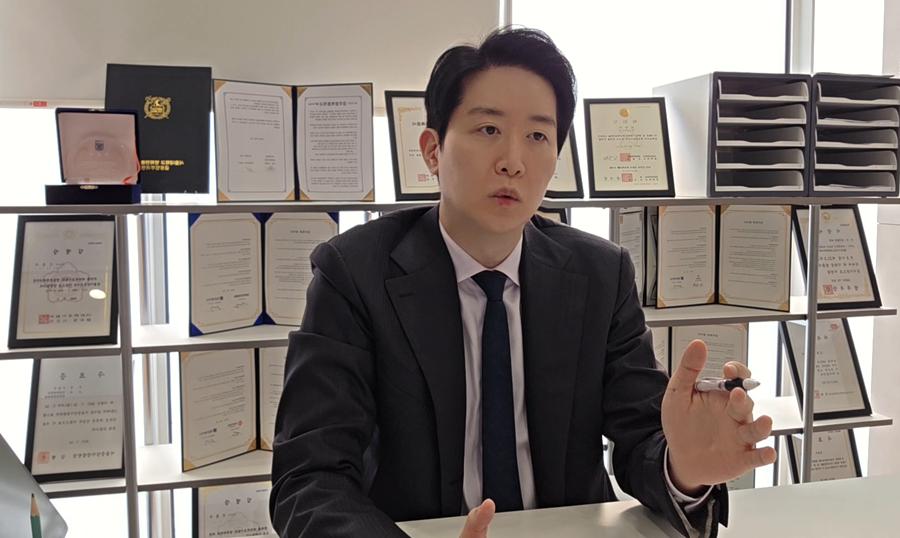
Attorney Shin Dong-woo (Managing Partner, DAEON Law Firm), who specializes in sex crime cases, identifies two core issues in quasi-rape cases: "The points most fiercely contested in practice are, first, whether the other party was actually in a state of unconsciousness or inability to resist, and second, whether the actor was aware of that state and intended to take advantage of it." He explained, "Neither does the mere fact that alcohol was consumed or that there is no memory immediately establish a crime, nor, conversely, does the mere fact that they went to a lodging together establish consent."
'Blackout' and 'passing out' are different... the line drawn by Supreme Court precedent
The Supreme Court regards a state of unconsciousness (mental incapacity) in quasi-rape as 'a state lacking the normal capacity to judge sexual acts,' and inability to resist as 'a state in which resistance is psychologically or physically impossible or markedly difficult.' In particular, while the Supreme Court distinguishes between an 'alcohol blackout,' in which only memories fail to form due to intoxication, and 'passing out,' in which consciousness itself is lost, it has made clear that even if the victim did not completely lose consciousness, a state in which the victim could not exercise sexual self-determination may constitute unconsciousness or inability to resist (Supreme Court Decision 2018Do9781, decided February 4, 2021).
Attorney Shin Dong-woo said, "The recent trend in investigations and trials is not to rely on one side's account, but to reconstruct events in chronological order, including the person's gait and whether they were being supported as seen on CCTV, the process of entering the lodging, card payment and taxi records, and the context of KakaoTalk conversations before and after the incident, in order to assess the victim's condition and the suspect's awareness at the time." He added, "Just because someone is seen walking on CCTV does not mean one can conclude they had normal judgment, and conversely, a statement that one has no memory does not by itself establish inability to resist, so in the end it comes down to a battle over who assembles the puzzle of objective circumstances correctly."
A case in which a warrant was rejected at the pre-arrest hearing... "early statements decide one's fate"
In actual cases, early response becomes the decisive variable in whether a suspect is detained. Take the case of Mr. A, an office worker in his 30s, who was accused of quasi-rape following a drinking gathering with coworkers. The investigative agency sought an arrest warrant for Mr. A, but at the pre-arrest hearing his counsel submitted a timeline of the messenger conversation the two had exchanged on the day, the CCTV footage before and after moving to the lodging, and payment records, and demonstrated that there was no risk of evidence destruction or flight, pointing out, among other things, that Mr. A had voluntarily consented to forensic examination of his phone from the earliest stage of the investigation. The court rejected the warrant, and Mr. A was able to exercise his right to defense without being detained.
Attorney Shin Dong-woo stressed, "The trap suspects fall into most often is an explanation along the lines of 'the other person was drunk too, but I thought they consented,' which the investigative agency may instead treat as evidence of intent, showing that the suspect himself knew the other party was heavily intoxicated." He added, "Since a single remark meant to protest one's innocence can work like an unfavorable confession, it is more important than anything to carefully compare the objective materials with one's own memory and organize one's statement before the first interview."
"Whether perpetrator or victim, build a timeline of evidence before responding emotionally"
A quasi-rape case is one in which not a single statement but all the circumstances before and after the incident become evidence. Whether one has been wrongfully accused or has suffered harm, the side that proves how closely its claims match the objective materials ultimately ends up in the stronger position.
Attorney Shin Dong-woo emphasized, "A quasi-rape case is one in which the lives of both the complainant and the accused are at stake, yet the parties themselves often make matters worse through emotional explanations or hasty contact." He added, "If you have been contacted by the police or have suffered harm, the best course is to refrain from contact with the other party, preserve the records of conversations, movements, and payments before and after the incident in their original form, and from the earliest stage design your response around the legal elements of the offense."
Source: LawLeader (http://www.lawleader.co.kr)
https://www.lawleader.co.kr/news/articleView.html?idxno=19802
16 clicks